DO & CO Trials Air Curtains in High-Risk Chiller Environment.
DO & CO is an internationally established premium catering operator, working with major airlines where food safety compliance is scrutinised to the highest level. In environments like these, Listeria risk management and environmental stability are critical parts of operational control.
The Overview
At a UK airline catering site operated by DO & CO, the team wanted to explore something practical: if climate separation at the chiller entrance is improved, what impact does that have on monitored hygiene indicators? Not to prove sterilisation. Not to claim elimination. But to observe conditions under controlled operation. Thermoscreens were on hand with an air curtain installed at the chiller entrance to support a structured trial backed by independent laboratory testing.
The Challenge of Listeria Risk Management
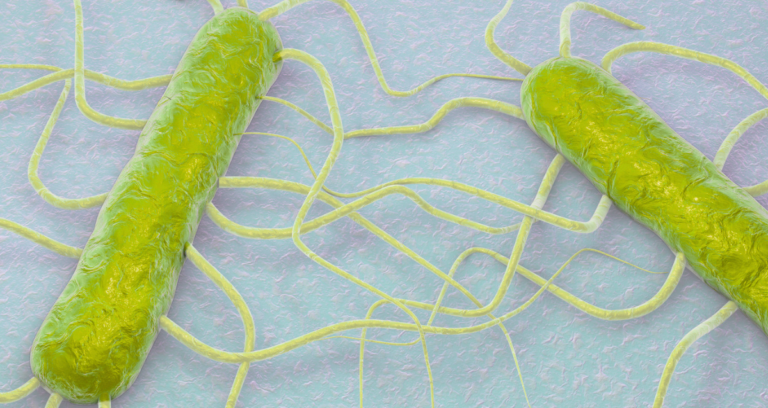
In chilled food environments, Listeria monocytogenes poses a serious commercial and operational risk. Unlike many other bacteria, Listeria can survive and even grow at refrigeration temperatures — which is exactly what makes it concerning in chilled food environments. Cold stores and prep chillers face frequent door openings, trolley movements and high staff traffic. Every time a door opens, warm humid air enters, meets cold surfaces and forms condensation — creating the kind of environmental instability that risk management programmes are designed to control. For airline catering, where compliance margins are minimal, this had to be minimised without disrupting daily operations.
The Solution
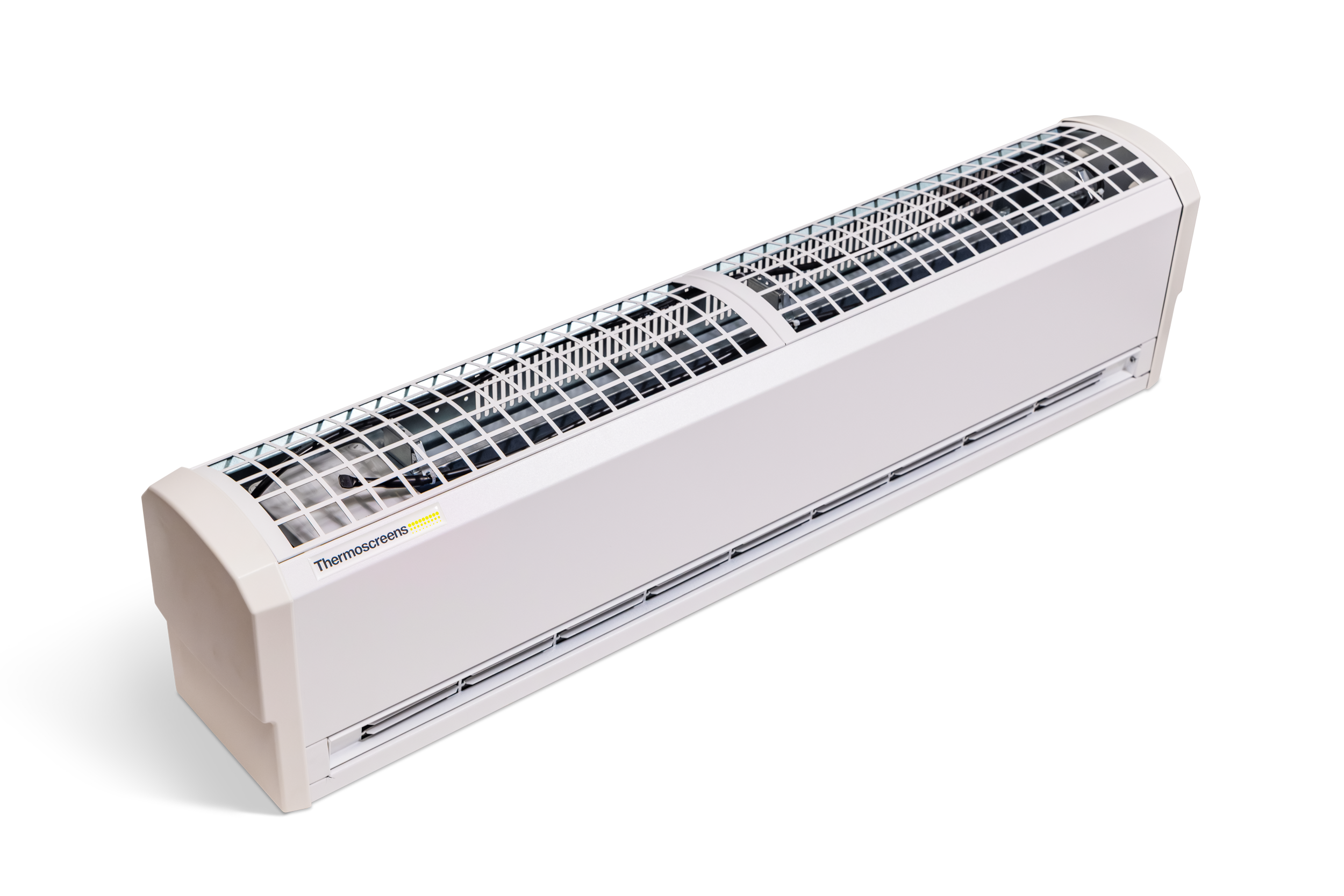
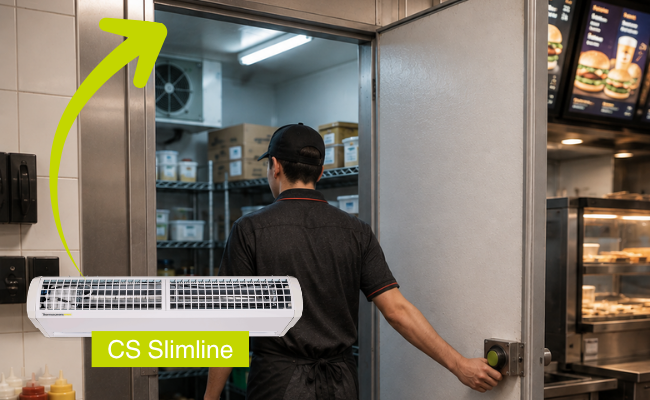
Thermoscreens installed an air curtain at the chiller entrance to support wider Listeria risk management and environmental control procedures during normal operation. The site then carried out a structured trial: the chiller was emptied (leaving minimal product inside), the air curtain operated continuously, and food samples and environmental swabs were taken. All samples were sent to Intertek Food (UK) for independent laboratory analysis, and the trial was repeated three times.
Air curtains are not antimicrobial devices. They do not kill bacteria, and they are not a substitute for hygiene protocols. What they do provide is climate separation — reducing uncontrolled warm, humid air ingress, supporting stable temperatures and lowering condensation.
Result
Listeria not detected – Independent laboratory reports across three monitored trials returned 0 cfu/plate.
Clean grille swab – The air curtain grille swab returned a Not Detected result.
Stable conditions – Controlled environmental conditions were maintained throughout the testing period.
No contamination introduced – No contamination was introduced by the air curtain during operation.
Conclusion
This trial did not prove that air curtains prevent Listeria — and that was never the intent. What it did demonstrate, with independent laboratory backing, was that no Listeria was detected during the monitored period and that controlled, stable environmental conditions were maintained throughout. Food safety incidents rarely come from a single failure; they happen when small instabilities stack up. By reducing one of those instabilities at the chiller entrance, the air curtain strengthened the wider hygiene programme rather than replacing any part of it.In high-compliance environments like airline catering, stable climate separation can support wider Listeria risk management strategies alongside hygiene and operational controls.




Testimonials
“We’ve been very pleased with your products and would like to continue using them as a design feature in all our shops.”
- Project Manager, large ice-cream manufacturer.
“Wrapped up and gone before the lunch service, great turnaround from order to delivery.”
- Director, Restaurant in Aldwych
“Thank you for having an excellent working relationship with me, you are a credit to Thermoscreens.”
- Technical Engineer, HVAC
“The new air curtains in the freezer room have completely eliminated any ice and frost build up around the room, including the evaporators. As the main reason for cold room failure, this will undoubtedly help to reduce costly downtime, stock loss and maintenance calls.”
- Refrigeration Manager at leading supermarket
“The units we installed at Birmingham this week. We really enjoyed installing your units and would like to use them moving forward with the other stores.”
- Installer, Restaurant in Birmingham
“I would like to take this opportunity to thank you all for your performance, we have all been very impressed with your response to queries and turnaround of air curtains.”
- Installer, HVAC
“Thank you for all your support. We couldn’t have won this project without your assistance.”
- Senior engineer