Could Your Doorway Be Costing You Beer? A Brewery’s Guide to Cold Storage Climate Control.

For UK breweries and beer distribution hubs, cold storage climate control isn’t a back-office detail — it’s the difference between a cask that reaches the pub in perfect condition and one that arrives flat, fobbed, or leaking. Every degree of temperature drift in a cold store or loading bay chips away at product quality, drives up refrigeration costs, and increases the risk of stock loss.
Cask ale is a living product. It ferments, breathes, and reacts to its environment right up until the moment it’s poured. That sensitivity makes brewery cold storage one of the most demanding climate control challenges in UK food and drink logistics, and one of the most overlooked, until a warm afternoon turns into a costly problem at the loading bay door.
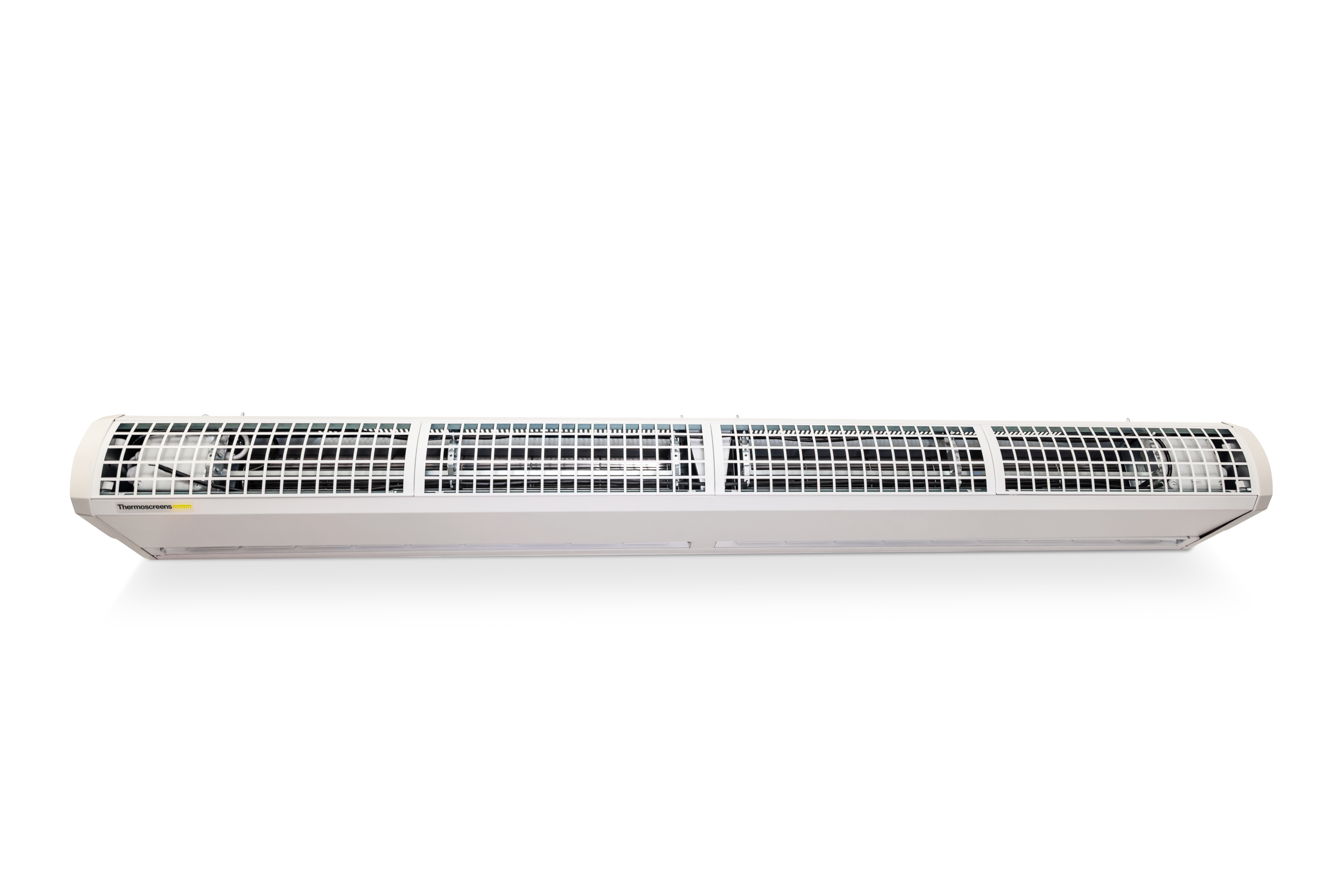
This guide explains what causes temperature fluctuations in brewery cold storage, how they damage cask barrels and stock, and how a purpose-built air curtain, specifically the Thermoscreens Slimline CS Air Curtain – helps operations, maintenance and facilities teams protect product, cut energy waste, and reduce safety risk at the doorway.
What Causes Temperature Fluctuations in Brewery Cold Storage?
Every time a cold store, distribution warehouse, or loading bay door opens, warm ambient air rushes in to replace the cold air escaping. In a brewery or beer distribution hub, this happens repeatedly throughout the day, during deliveries, forklift movement, and dispatch.
Common causes of temperature instability in brewery cold stores include:
- Frequent door openings at loading bays and cold room entrances during peak dispatch periods
- Outdated barriers such as PVC strip curtains, which degrade and lose their seal over time
- Summer ambient heat pushing outside temperatures well above the cold store’s target range
- Poorly maintained refrigeration plant working overtime to recover lost cold air
- Limited headspace above doorways, which rules out bulkier climate control equipment in many older brewery buildings
Left unaddressed, these fluctuations don’t just cost energy, they put cask integrity, stock volumes, and staff safety at risk.
How Does Rising Cold Store Temperature Damage Cask Ale and Barrels?
This is the question every product quality manager and operations manager in the brewing sector should be asking. Cask ale is a naturally conditioned, unpasteurised product, and it is far more sensitive to temperature swings than pasteurised keg beer.
Industry guidance is consistent: cask ale should be held at a stable 11–13°C, with even a small drift outside this band affecting yeast activity, gas pressure and shelf life. Once a cellar or cold store climbs toward 16–18°C, the risks escalate quickly. Elevated temperatures wake up the dormant yeast still present in a cask, accelerating secondary fermentation. This builds internal pressure faster than the cask is designed to release it — and it is widely reported as a leading cause of cask seal failure in UK pubs and cellars, resulting in fobbing, stopper displacement, and, in more serious cases, valve or stopper failure as trapped gas expands beyond the seal’s tolerance.
The practical consequences for a brewery or distribution hub include:
- Stock loss – a single failed cask can mean the loss of an entire batch (36 pints or more) in one incident
- Safety risk – pressurised gas release from a failed stopper or valve can cause injury to warehouse or cellar staff
- Product quality degradation – even sub-visible temperature drift ages beer faster, flattening hop character and aroma before the cask ever leaves the warehouse
- Reputational and commercial impact — flat, hazy or off-flavour beer damages trade relationships and repeat orders
For a distribution hub moving hundreds of casks a week, even a small percentage of heat-related failures adds up to a significant, avoidable cost line.
How Does an Air Curtain Work to Control Cold Store Climate?
An air curtain is a doorway-mounted unit that projects a controlled stream of air from top to bottom (or side to side) across an opening. Rather than physically sealing the doorway, it creates an invisible, high-velocity barrier that separates the cold internal air from warmer external air – without stopping people, pallets, or forklifts moving freely through the space.
For brewery cold storage specifically, this matters because:
- The doorway stays fully open for continuous cask and pallet movement, unlike strip curtains or physical doors that slow down high-frequency dispatch operations
- The air barrier reforms instantly after each pass-through, unlike PVC strips which can tear, stiffen in the cold, or lose their seal over time
- Consistent internal temperature is maintained even during long periods of high door traffic, protecting the 11–13°C band that cask ale depends on
Positioned correctly, an air curtain recirculates the cold store’s own conditioned air rather than pulling in outside air – meaning refrigeration plant doesn’t have to work as hard to recover lost cooling capacity after every door cycle.
What Is the ROI of Installing an Air Curtain in a Brewery Cold Store?
For operations and facilities managers evaluating capital spend, the return on investment for cold store air curtains typically comes from three combined savings streams:
- Reduced refrigeration energy consumption – less cold air escapes with each door opening, meaning compressors run fewer, shorter cycles.
- Reduced stock loss – fewer heat-related cask failures means fewer written-off batches and fewer damaged-goods credits issued to trade customers.
- Reduced maintenance and downtime costs – less ice and frost build-up around evaporators and doorways reduces defrost cycles, callouts and unplanned downtime.
Independent studies referenced by ASHRAE (the American Society of Heating, Refrigerating and Air-Conditioning Engineers) found that properly specified, AMCA-certified air curtains can save between 0.3% and 2.2% of a building’s whole-site annual energy use compared with unprotected or vestibule-only doorways – a meaningful figure when scaled across a distribution hub running cold storage year-round.
For most breweries, the payback period on a compact, purpose-built unit like the Slimline CS is typically measured in a small number of years once energy savings, reduced stock loss, and reduced maintenance callouts are combined – a calculation your Thermoscreens Sales Executive can help model against your specific site data during a site survey.
Why Choose the Thermoscreens Slimline CS Air Curtain for Breweries?
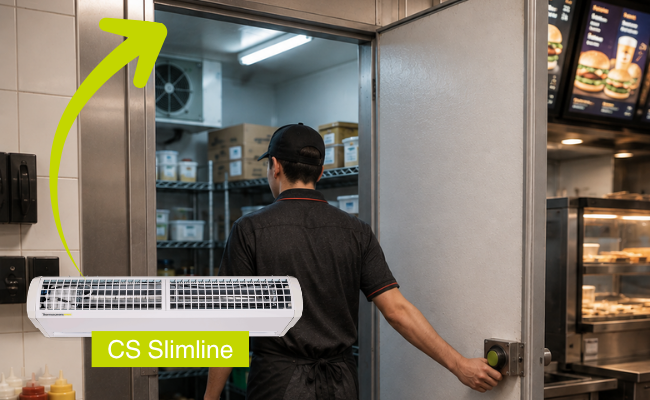
Many brewery cold stores and distribution hub loading bays were built with limited headspace above the doorway, which rules out larger, standard-depth air curtain units. This is exactly the problem the Slimline CS Air Curtain was engineered to solve.
Key specification points relevant to brewery operators:
- Compact, low-headspace design – purpose-built for cold store doorways where space above the opening is at a premium
- Proven performance down to -25°C, suitable for chilled cask storage areas and adjoining frozen goods stores on the same site
- EC motor technology for energy-efficient operation and precise airflow control
- Built-in frost protection, including a heated, enlarged inlet grille to prevent ice build-up around the unit itself
- Reduces ice and frost formation at the doorway, a common cause of slip hazards and evaporator strain in cold storage environments
As one operator using Thermoscreens’ cold store range put it, air curtains fitted around freezer room doorways eliminated ice and frost build-up on evaporators, a change reported to meaningfully cut downtime, stock loss and maintenance calls.
For breweries and distribution networks specifically, the Slimline CS is suited to:
- Cask and keg cold storage rooms
- Loading bay doorways between ambient and chilled zones
- Distribution hub cross-dock cold storage
- Sites transitioning away from ageing or damaged PVC strip curtains
Explore the full specification on the Slimline Cold Store Air Curtain product page, or compare it against the standard-depth CS Cold Store Air Curtain if headspace isn’t a constraint at your site. For a broader look at what separates a high-performance unit from a basic one — including airflow velocity, volume and independent certification — see our guide to air curtain specification factors.

How to Reduce Energy Waste in Beer Distribution Cold Storage: A Practical Checklist
Facilities and maintenance managers can take a structured approach to reducing energy waste and temperature fluctuation risk across a brewery or distribution site:
- Audit doorway traffic — identify which cold store and loading bay doors open most frequently during peak dispatch
- Replace degraded PVC strip curtains with an air curtain that maintains a consistent barrier regardless of wear
- Fit frost-protected units in freezer-adjacent areas to reduce evaporator strain and defrost frequency
- Monitor cellar and cold store temperature daily, recording drift outside the 11–13°C cask ale range
- Service refrigeration plant on schedule so it isn’t compensating for an already-inefficient doorway
- Specify EC motor, ErP-compliant equipment wherever climate control units are replaced or upgraded, to keep running costs down long-term
Explore our wider Cold Chain air curtain range to see how different unit types — from the Slimline CS to the harsh-environment HE Series – apply across chilled, frozen and washdown areas of a brewery site.
Frequently Asked Questions
What temperature should a brewery cold store be kept at?
Cask ale is typically stored at 11–13°C, in line with widely followed UK cellar management guidance. Frozen goods areas on the same site may run as low as -25°C, which is why matching the right air curtain to each zone matters.
Can heat cause a cask barrel stopper or valve to fail?
Yes. Rising temperature reactivates dormant yeast in a cask, increasing internal gas pressure. Sustained heat exposure is widely reported as a leading cause of cask seal failure, fobbing, and, in more serious cases, stopper or valve displacement.
How does an air curtain reduce energy costs in cold storage?
An air curtain forms a barrier of recirculated air across an open doorway, reducing the volume of cold air lost each time the door opens. This means the refrigeration plant cycles less often and uses less energy to maintain target temperature.
Is an air curtain better than a PVC strip curtain for a brewery cold store?
For high-frequency dispatch environments, air curtains offer a more consistent barrier than PVC strips, which can tear, stiffen, or lose their seal over time. Air curtains also allow completely unobstructed pallet and forklift movement through the doorway.
What makes the Slimline CS suitable for breweries with limited headspace?
The Slimline CS Air Curtain was specifically engineered for cold store doorways where there isn’t room above the opening for a standard-depth unit, while still delivering the same climate separation performance down to -25°C.
How quickly does an air curtain pay for itself in a brewery cold store?
Payback depends on door traffic, current energy costs, and existing stock loss rates, but combined savings from reduced refrigeration load, fewer damaged casks, and lower maintenance callouts typically bring a compact unit like the Slimline CS to payback within a small number of years. A site survey can model this for your specific operation.
Protect Your Product, Your People, and Your Margins
Temperature fluctuations at the cold store doorway are one of the most preventable causes of stock loss, safety risk and energy waste in brewery and beer distribution operations. A correctly specified air curtain. sized and positioned for your site – closes that gap without slowing down dispatch.
If your team is managing cask damage, high energy bills, or ice build-up at your cold store doorway, book a free site survey with Thermoscreens. Our engineers will assess your headspace, door traffic and target temperature range, and recommend the right Slimline CS or Cold Chain air curtain specification for your brewery or distribution hub.

Testimonials
“We’ve been very pleased with your products and would like to continue using them as a design feature in all our shops.”
- Project Manager, large ice-cream manufacturer.
“Wrapped up and gone before the lunch service, great turnaround from order to delivery.”
- Director, Restaurant in Aldwych
“Thank you for having an excellent working relationship with me, you are a credit to Thermoscreens.”
- Technical Engineer, HVAC
“The new air curtains in the freezer room have completely eliminated any ice and frost build up around the room, including the evaporators. As the main reason for cold room failure, this will undoubtedly help to reduce costly downtime, stock loss and maintenance calls.”
- Refrigeration Manager at leading supermarket
“The units we installed at Birmingham this week. We really enjoyed installing your units and would like to use them moving forward with the other stores.”
- Installer, Restaurant in Birmingham
“I would like to take this opportunity to thank you all for your performance, we have all been very impressed with your response to queries and turnaround of air curtains.”
- Installer, HVAC
“Thank you for all your support. We couldn’t have won this project without your assistance.”
- Senior engineer