You’re Heating the High Street And Paying For It.
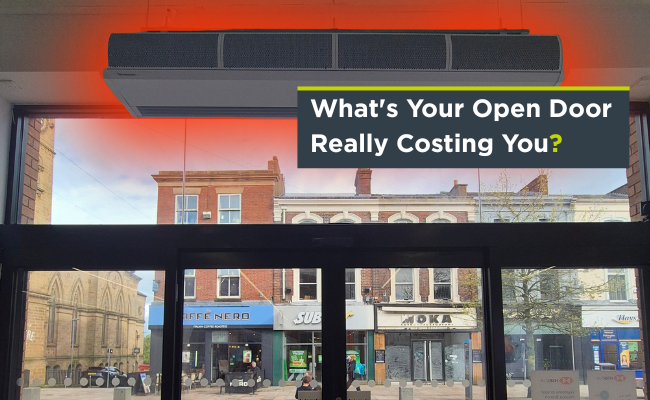
Quick Answer: Open doors in high street retail can account for up to 60–80% of a building’s total heating or cooling loss. Installing a commercial air curtain is one of the most cost-effective interventions available, with typical payback periods of 12–24 months.
Walk down any UK high street on a cold January morning and you will see a familiar sight: retail units with doors propped wide open, warm air billowing visibly into the street. It looks welcoming — but behind that open door is a costly energy crisis playing out in real time.
For retail business owners, facilities managers, and sustainability leads, energy efficiency in retail has never been more urgent. With commercial energy prices remaining elevated and Net Zero obligations firmly on the boardroom agenda, the question is no longer whether to act, but where to start.
The answer, for most high street retailers, is the entrance door.
What Is Energy Loss at Open Doors?
Every time a retail door opens – or stays open – your heating, ventilation, and air conditioning system has to work harder to compensate. Warm internal air escapes via convection and pressure differentials. Cold external air infiltrates. The HVAC system responds automatically, invisibly, and expensively.
According to the Carbon Trust, space heating accounts for approximately 56% of total energy use in UK commercial buildings. Entrance infiltration is one of the primary drivers of heating system overload — and one of the most straightforward to address.
In winter, a single open doorway in a typical 200 m² retail unit can cost an estimated £1,500–£4,000 in wasted heating per year. Across a multi-site estate, that loss compounds fast.
Why Do Retailers Keep Their Doors Open?
The behaviour is rational. Open doors signal accessibility, improve footfall conversion, and enhance the reach of visual merchandising and in-store scent. Some retailers report footfall reductions of up to 30% when doors are closed.
The challenge, then, is not to force retailers to close their doors — it is to decouple the energy loss from the open-door commercial advantage. That is precisely what air curtain technology is designed to do.
How Does an Air Curtain Prevent Energy Loss?
An air curtain (or air door) is mounted above the entrance and projects a controlled, high-velocity stream of air downward across the full width of the opening. This invisible aerodynamic seal separates the internal and external environments, without any physical barrier to customers or staff.
Beyond thermal separation, a correctly specified air curtain also prevents:
- Entry of insects and airborne contaminants
- Dust and exhaust infiltration on busy retail streets
- Loss of cool conditioned air in summer (relevant for food retail and pharmacies)
A correctly specified Thermoscreens air curtain can reduce entrance infiltration loss by up to 86%, per independent testing to EN 16101:2012 – the European standard for air curtain performance.
What Is the ROI of an Air Curtain for a Retail Unit?
Commercial air curtains compare favourably against almost any other building services investment.
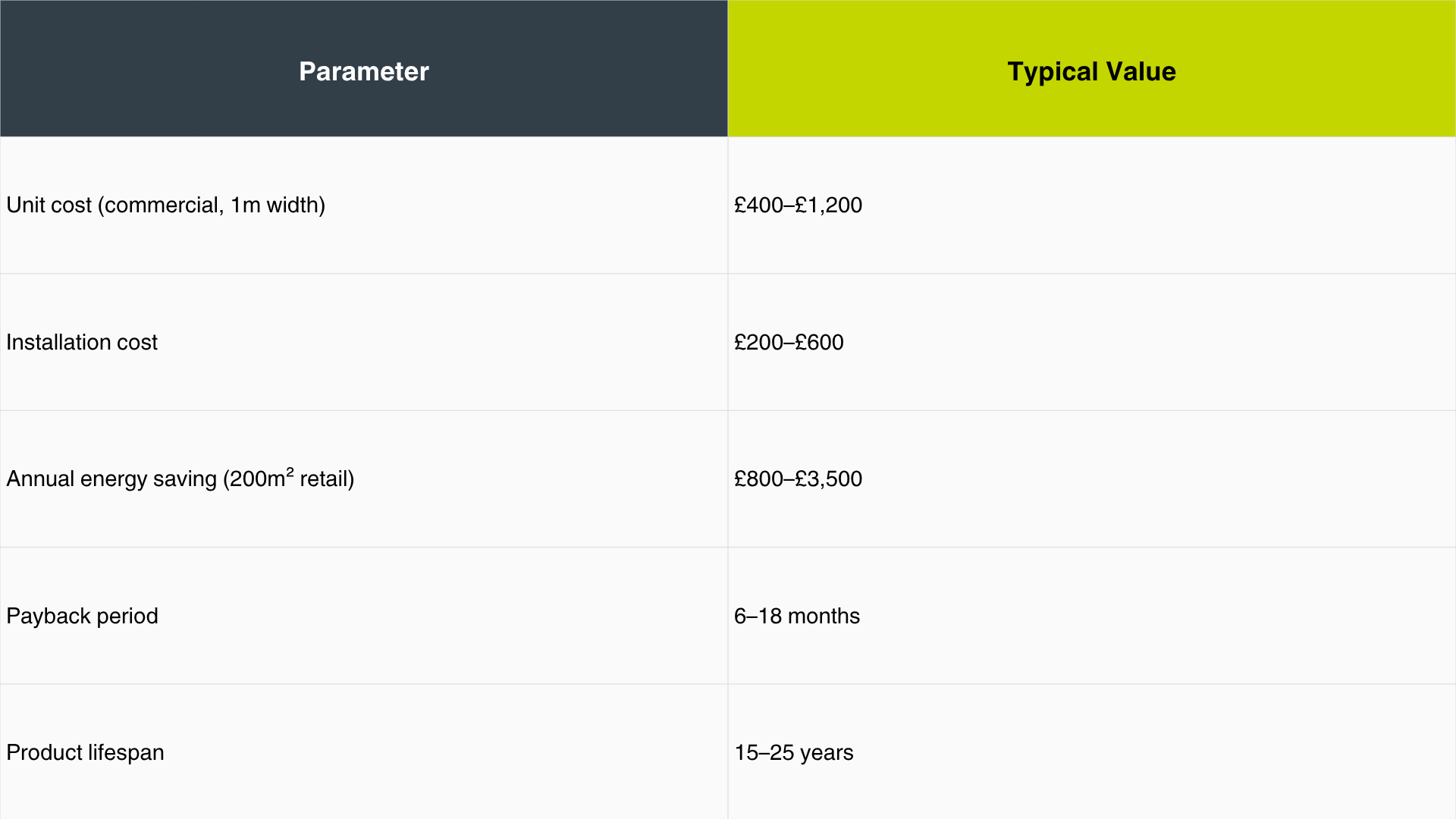
Figures are indicative. Thermoscreens offers free site surveys to calculate site-specific ROI.
The financial case extends beyond energy savings. Reduced HVAC maintenance costs, improved staff wellbeing, better customer dwell time, and demonstrable progress against ESOS and carbon reduction obligations all add measurable value.
View Thermoscreens’ Retail Case Studies → | Try our Product Selector →
Regulations: What Do Retailers Need to Know?
The regulatory direction of travel is clear. Building Regulations Part L requires commercial buildings to minimise energy waste, and ESOS audits routinely flag entrance infiltration as a major, addressable loss. Several UK local authorities, including London boroughs, have consulted on or implemented open-door policies during heating season.
Installing an air curtain is both a sound commercial decision and a proactive compliance measure, demonstrating energy management due diligence for ESG reporting, ESOS audit purposes, and evolving lease covenant obligations.
Frequently Asked Questions
Do I need to close my shop door if I install an air curtain?
No. An air curtain lets you keep your entrance open, maintaining footfall and brand experience — while preventing the energy loss that would otherwise occur.
How quickly will an air curtain pay for itself?
Typically 6–24 months, depending on door dimensions, energy tariff, and door-open time. Multi-site retailers often see faster payback through procurement economies.
What’s the difference between a heated and recirculating air curtain?
A recirculating unit projects ambient internal air across the doorway — effective for summer separation and pest exclusion. A heated unit adds integral electric or LPHW heating, making it the preferred choice for most UK retailers in autumn, winter, and spring.
Which air curtain is right for a high-ceiling entrance?
For mounting heights above 2.5m, a high-throw unit is required. Thermoscreens manufactures models rated up to 4.5m
— contact the technical team for a specification consultation →.
How does Thermoscreens differ from other manufacturers?
With over 50 years of UK manufacturing experience, products independently tested to EN 16101:2012, and a market-leading LPHW range, Thermoscreens provides unmatched specification support and a national network of approved installation partners.
Stop Heating the High Street
Energy loss through open retail doors is one of the most significant, and most addressable, sources of waste on the UK high street. A correctly specified air curtain from Thermoscreens will begin delivering measurable savings from day one, with payback inside two years and a product lifespan measured in decades.
For facilities managers, sustainability leads, and retail operators ready to take action, the entrance is the right place to start.
Request Your Free Site Survey →
Download the Thermoscreens Retail Brochure →
Speak to a Specialist →
References: Carbon Trust | CIBSE Guide A | DESNZ GHG Conversion Factors 2024 | EN 16101:2012 | UK Building Regulations Part L

Testimonials
“We’ve been very pleased with your products and would like to continue using them as a design feature in all our shops.”
- Project Manager, large ice-cream manufacturer.
“Wrapped up and gone before the lunch service, great turnaround from order to delivery.”
- Director, Restaurant in Aldwych
“Thank you for having an excellent working relationship with me, you are a credit to Thermoscreens.”
- Technical Engineer, HVAC
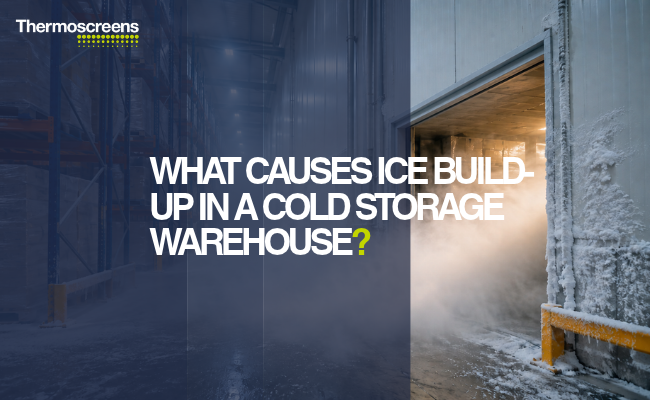
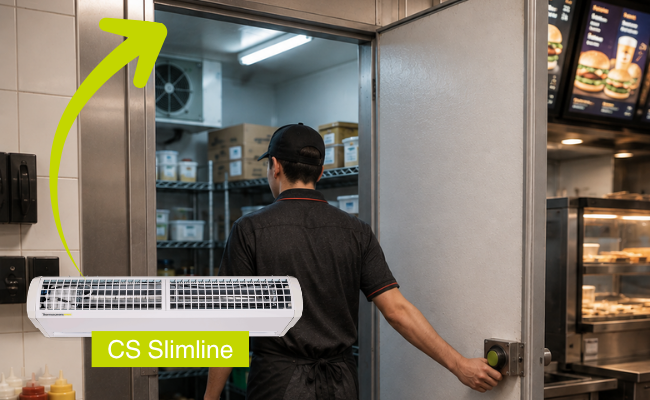
“The new air curtains in the freezer room have completely eliminated any ice and frost build up around the room, including the evaporators. As the main reason for cold room failure, this will undoubtedly help to reduce costly downtime, stock loss and maintenance calls.”
- Refrigeration Manager at leading supermarket
“The units we installed at Birmingham this week. We really enjoyed installing your units and would like to use them moving forward with the other stores.”
- Installer, Restaurant in Birmingham
“I would like to take this opportunity to thank you all for your performance, we have all been very impressed with your response to queries and turnaround of air curtains.”
- Installer, HVAC
“Thank you for all your support. We couldn’t have won this project without your assistance.”
- Senior engineer