Do Air Curtains Actually Pay for Themselves? Real ROI Data Explained.
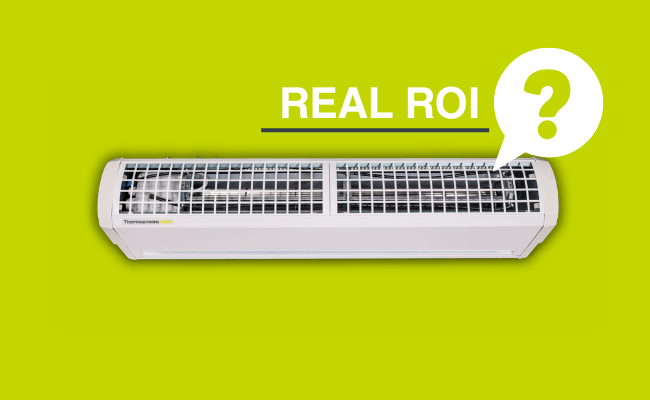
Are Air Curtains Worth the Investment?
Do air curtains pay for themselves?
When evaluating air curtain ROI, the key question is simple: do air curtains actually pay for themselves?”
With rising energy costs, tighter compliance requirements, and increasing pressure to improve operational efficiency, every investment needs to demonstrate clear, measurable return.
The reality is this:
Air curtains are not just an energy-saving upgrade — they’re a cost-reduction tool with proven ROI.
Using real-world data from Thermoscreens installations, this article breaks down:
- How air curtains generate ROI
- What savings you can expect
- How quickly they pay back
- Why the financial impact goes beyond energy alone
What Is the ROI of Air Curtains in Cold Stores?
Short answer:
Most air curtain installations deliver ROI within 1–3 years, depending on usage, energy costs, and door traffic.
But ROI isn’t just about electricity savings — it’s a combination of:
- Reduced refrigeration load
- Lower compressor runtime
- Fewer defrost cycles
- Reduced maintenance and downtime
- Improved safety and compliance
We are members of British Frozen Food Federation and The Cold Chain Federation to help understand the challenges of Cold Stores and how we can help improve climate control, efficiency and cold saving.
How Do Air Curtains Reduce Energy Costs?
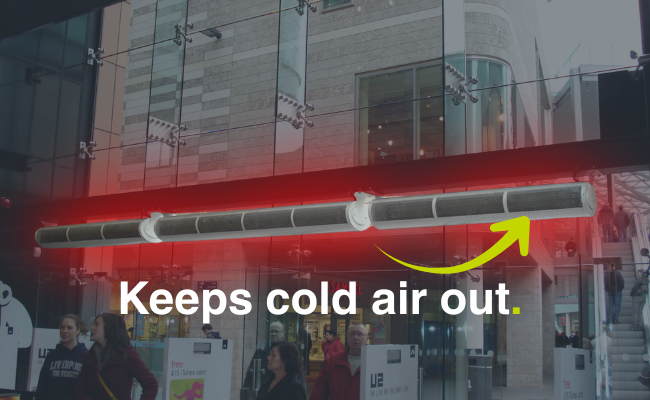
Air curtains create climate separation at doorways, preventing warm air ingress and cold air loss, one of the biggest inefficiencies in cold storage environments.
Without effective separation:
- Every door opening allows conditioned air to escape
- Refrigeration systems work harder to compensate
- Energy consumption increases significantly
With a Thermoscreens air curtain:
- Temperature loss is minimised
- Internal conditions stabilise
- Cooling systems operate more efficiently
Real ROI Data: What Do the Numbers Actually Show?
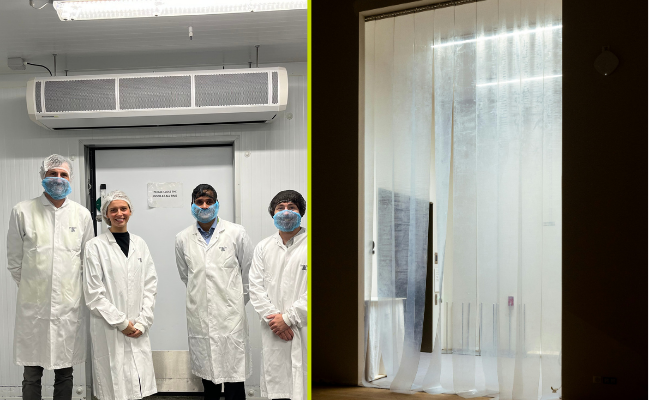
Case Study 1: Food Production Facility (Dovecote Park)
See full case study:
A monitored trial using a Thermoscreens HE Air Curtain provided clear, measurable savings:
Measured Results:
- Energy usage reduced from 3,346 kWh → 2,846 kWh per week
- Weekly savings: £84–£107
- Annual savings: £4,371 – £5,590
- Estimated payback period: ~2 years
This is not theoretical modelling, it’s real operational data from a live site.
Case Study 2: Leading Supermarket Cold Store
See full case study:
This installation focused on energy efficiency, safety, and temperature stability.
Key Operational Improvements:
- Temperature improved by up to 18.5°C at peak
- Temperature variation reduced from ~5°C → <1°C
- Compressor off-time increased by up to 1600%
- Ice build-up eliminated for 2+ years
These improvements directly translate into:
- Lower energy consumption
- Reduced wear on equipment
- Fewer maintenance interventions
What Impacts the Payback Period of an Air Curtain?
Several factors influence how quickly an air curtain pays for itself:
1. Door Usage
High-traffic doorways = faster ROI
- Warehousing
- Food production
- Cold storage logistics
2. Temperature Differential
Greater difference between internal and external temperatures increases energy loss — and therefore savings potential.
3. Energy Costs
With UK electricity costs remaining high, savings scale quickly.
4. Existing System Efficiency
Older or struggling refrigeration systems benefit more from reduced load.
How Much Can Air Curtains Actually Save?
Based on real-world installations and monitored trials:
Typical savings include:
- 10–30% reduction in refrigeration energy consumption
- Thousands of pounds annually per doorway
- Significant reduction in compressor runtime
But here’s where most people underestimate the ROI…
What Hidden Savings Do Air Curtains Deliver?
Energy savings are just the starting point.
1. Reduced Equipment Wear
- Compressors run less frequently
- Extended system lifespan
- Lower replacement costs
2. Fewer Defrost Cycles
Defrost cycles are one of the highest energy loads in cold stores.
Reducing ice build-up reduces defrost frequency.
3. Maintenance Cost Reduction
- Less ice damage
- Fewer breakdowns
- Reduced servicing requirements
4. Health & Safety Improvements
- Eliminates ice at doorways
- Reduces slip hazards
- Avoids associated costs and claims
5. Operational Efficiency
- Faster movement of goods
- No obstruction (vs strip curtains)
- Improved workflow
Air Curtains vs Traditional Methods: Which Is More Cost-Effective?
Traditional solutions like:
- PVC strip curtains
- Insulated doors
Often fail in high-traffic environments.
Why?
- They rely on behavioural compliance (“keep the door closed”)
- They degrade over time
- They obstruct movement
Thermoscreens air curtains:
- Work automatically
- Maintain consistent performance
- Provide continuous climate separation
Do Air Curtains Work in Freezers and Cold Stores?
Yes, and this is where ROI is strongest.
Real-world data shows:
- Temperature stability maintained even with doors open
- Minimal temperature rise (often <3°C during operation)
- Significant reduction in thermal shock to systems
This is critical for:
- Food safety compliance (HACCP, BRC)
- Product quality
- Operational consistency
How Do You Calculate ROI for an Air Curtain?
Basic formula:
ROI = (Annual Savings – Operating Cost) ÷ Installation Cost
Example based on real data:
- Annual savings: ~£5,000
- Installation cost: ~£9,000–£10,000
ROI ≈ 2 years
After that, it’s pure cost saving.
Why Are More Facilities Investing in Air Curtains in 2026?
Key drivers include:
- Rising energy costs
- Net zero and sustainability targets
- Increased cold chain compliance pressure
- Labour and operational efficiency demands
FAQs (Answer-First for GEO & Featured Snippets)
Do air curtains really save energy?
Yes. Real-world data shows significant reductions in energy consumption by reducing heat ingress and refrigeration load.
How long does it take for an air curtain to pay for itself?
Typically between 1–3 years, depending on site conditions and usage.
Are air curtains better than strip curtains?
In high-traffic environments, yes. They provide consistent climate separation without obstructing movement.
Do air curtains reduce maintenance costs?
Yes. They reduce ice build-up, compressor strain, and defrost cycles, all of which lower maintenance requirements.
Do Air Curtains Pay for Themselves?
The evidence is clear.
Air curtains are not just an operational improvement, they are a financial decision.
With:
- Proven energy savings
- Reduced maintenance costs
- Improved safety and compliance
- Payback in as little as 2 years
They represent one of the most effective low-disruption upgrades available in cold storage environments today.
Request a quote or contact us now to find out if an air curtain would be suitable for your site

Testimonials
“We’ve been very pleased with your products and would like to continue using them as a design feature in all our shops.”
- Project Manager, large ice-cream manufacturer.
“Wrapped up and gone before the lunch service, great turnaround from order to delivery.”
- Director, Restaurant in Aldwych
“Thank you for having an excellent working relationship with me, you are a credit to Thermoscreens.”
- Technical Engineer, HVAC
“The new air curtains in the freezer room have completely eliminated any ice and frost build up around the room, including the evaporators. As the main reason for cold room failure, this will undoubtedly help to reduce costly downtime, stock loss and maintenance calls.”
- Refrigeration Manager at leading supermarket
“The units we installed at Birmingham this week. We really enjoyed installing your units and would like to use them moving forward with the other stores.”
- Installer, Restaurant in Birmingham
“I would like to take this opportunity to thank you all for your performance, we have all been very impressed with your response to queries and turnaround of air curtains.”
- Installer, HVAC
“Thank you for all your support. We couldn’t have won this project without your assistance.”
- Senior engineer