Air Curtains vs Strip Curtains in Frozen Food Production: Which Is the Better Solution?.
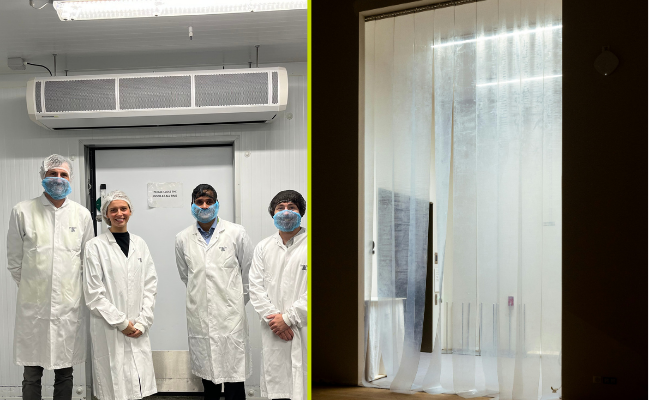
Why Frozen Food Production Needs Better Doorway Control
In frozen food production, maintaining strict temperature control is critical for product quality, food safety, and energy efficiency. One of the most common questions facility managers ask is air curtains vs strip curtains – which is the better solution for cold stores and freezer rooms? Choosing the right doorway protection system can have a major impact on energy consumption, hygiene standards, and operational efficiency in temperature-controlled environments.
For many years, PVC strip curtains have been widely used in cold rooms and frozen food facilities. However, modern production sites with high traffic levels, strict hygiene requirements, and rising energy costs are increasingly turning to cold store air curtains as a more effective alternative.
Understanding the differences between air curtains vs strip curtains in frozen food production is essential for selecting the right solution. The correct choice can help reduce cold air loss, prevent frost build-up, improve workflow, and deliver measurable energy savings.
Thermoscreens specialises in high-performance air curtains for cold storage and frozen food production, providing solutions designed specifically for sub-zero environments, frequent door openings, and hygiene-critical applications.
What Are Strip Curtains and How Do They Work?
Strip curtains are flexible PVC strips hung across a doorway to reduce airflow between temperature zones.
They are commonly used in:
-
Frozen food production plants
-
Cold rooms and freezers
-
Distribution centres
-
Food processing facilities
Advantages of strip curtains
-
Low initial cost
-
Simple installation
-
Widely available
-
No electrical supply required
Limitations in frozen food production
-
Reduce visibility and access
-
Can tear, crack, or become brittle in low temperatures
-
Difficult to keep clean in hygiene-critical areas
-
Allow significant air leakage during frequent door use
-
Cause delays for forklifts and operatives
In modern high-throughput frozen food facilities, these limitations often lead to energy loss, ice build-up, and operational inefficiency.
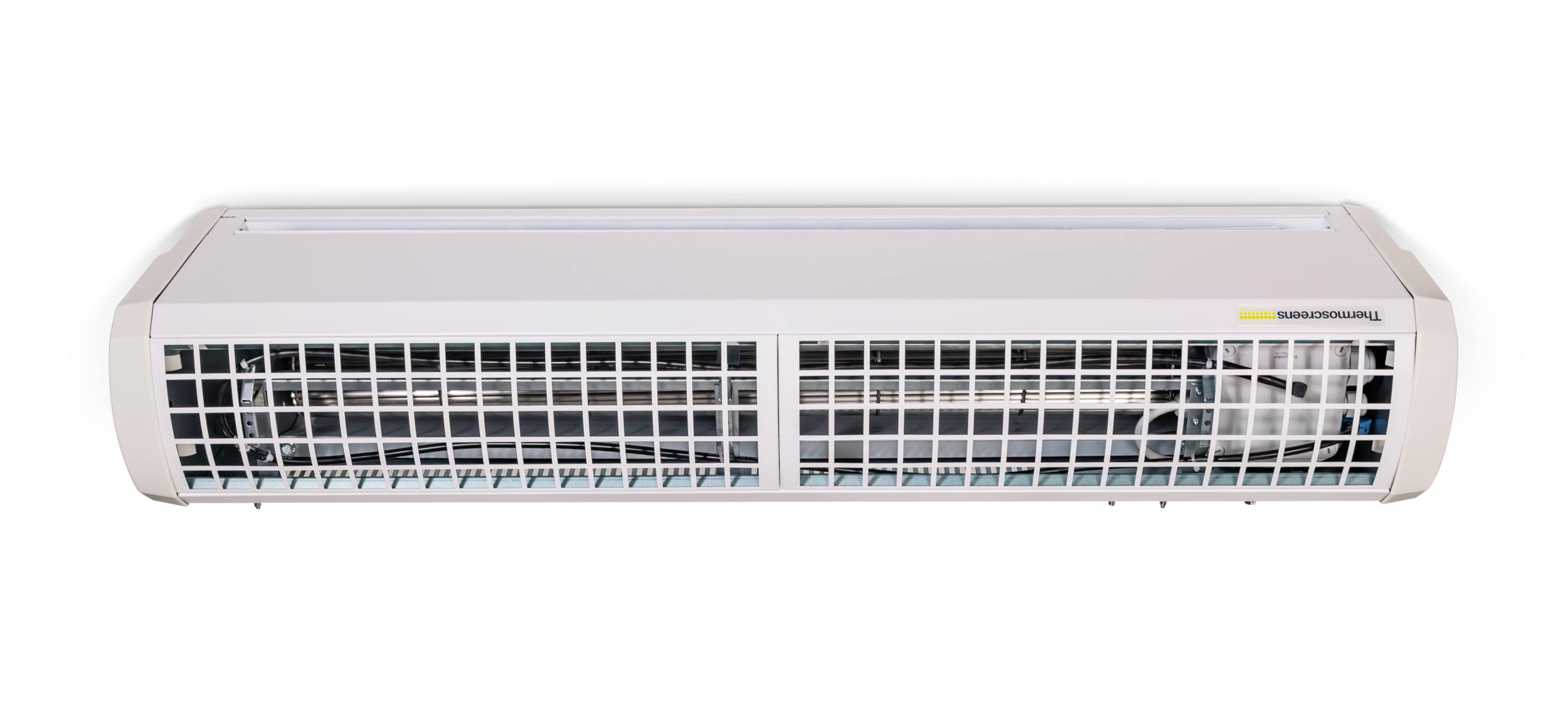
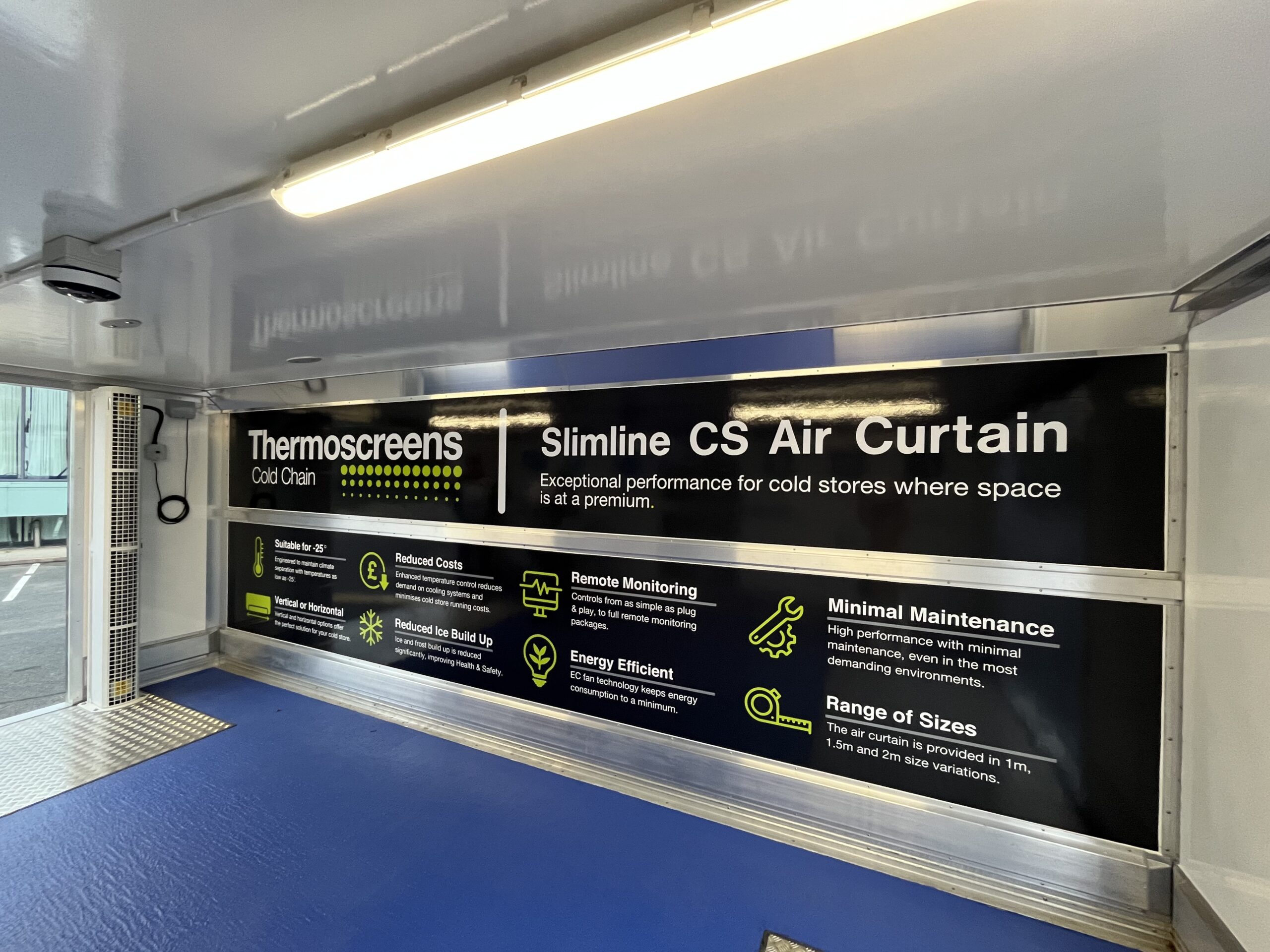
Thermoscreens CS Slim Air Curtain
What is an Air Curtain for Cold Storage?
A cold store air curtain creates a controlled, high-velocity stream of air across a doorway to separate two environments without a physical barrier.
Instead of blocking the opening, an air curtain:
-
Prevents warm air entering the cold room
-
Stops cold air escaping
-
Reduces condensation and frost
-
Maintains clear access
Specialist cold store air curtains, such as those from Thermoscreens, are designed for:
-
Sub-zero temperatures
-
High humidity environments
-
Frequent door openings
-
Hygiene-critical food production areas
Learn more about Thermoscreens cold store air curtains
Air Curtains vs Strip Curtains: Key Differences in Frozen Food Production
| Feature | Strip Curtains | Air Curtains |
|---|---|---|
| Energy efficiency | Moderate to poor | High |
| Access for forklifts | Restricted | Unhindered |
| Hygiene | Difficult to clean | Hygienic airflow barrier |
| Frost / condensation | Common | Reduced |
| Visibility | Obstructed | Clear |
| Maintenance | Frequent replacement | Low maintenance |
| Operating cost | High energy loss | Lower energy usage |
| Compliance | Basic | Suitable for modern food facilities |
In high-traffic frozen food production, air curtains often provide significantly lower total cost of ownership.
How Do Air Curtains Reduce Energy Loss in Frozen Food Production?
One of the biggest sources of cost in frozen food facilities is cold air loss through open doors.
When warm air enters a freezer room:
-
Refrigeration systems work harder
-
Ice forms on evaporators
-
Defrost cycles increase
-
Energy consumption rises
Air curtains reduce this by creating an air barrier that limits air exchange.
Typical benefits
-
Reduced refrigeration load
-
Lower electricity costs
-
More stable temperatures
-
Less ice formation
-
Improved product protection
Studies from organisations such as ASHRAE and Carbon Trust show that doorway air control solutions can significantly reduce energy loss in temperature-controlled buildings.
Why Strip Curtains Cause Problems in Frozen Food Production
In frozen food manufacturing, strip curtains often create operational issues:
Slower workflow
Forklift drivers must push through strips, reducing efficiency.
Hygiene concerns
PVC strips can:
-
Trap dirt
-
Collect condensation
-
Harbour bacteria
Increased maintenance
In sub-zero conditions, strips can:
-
Crack
-
Become opaque
-
Break off
Poor temperature control during frequent door use
Strip curtains only work when closed, but in production environments doors are often open.
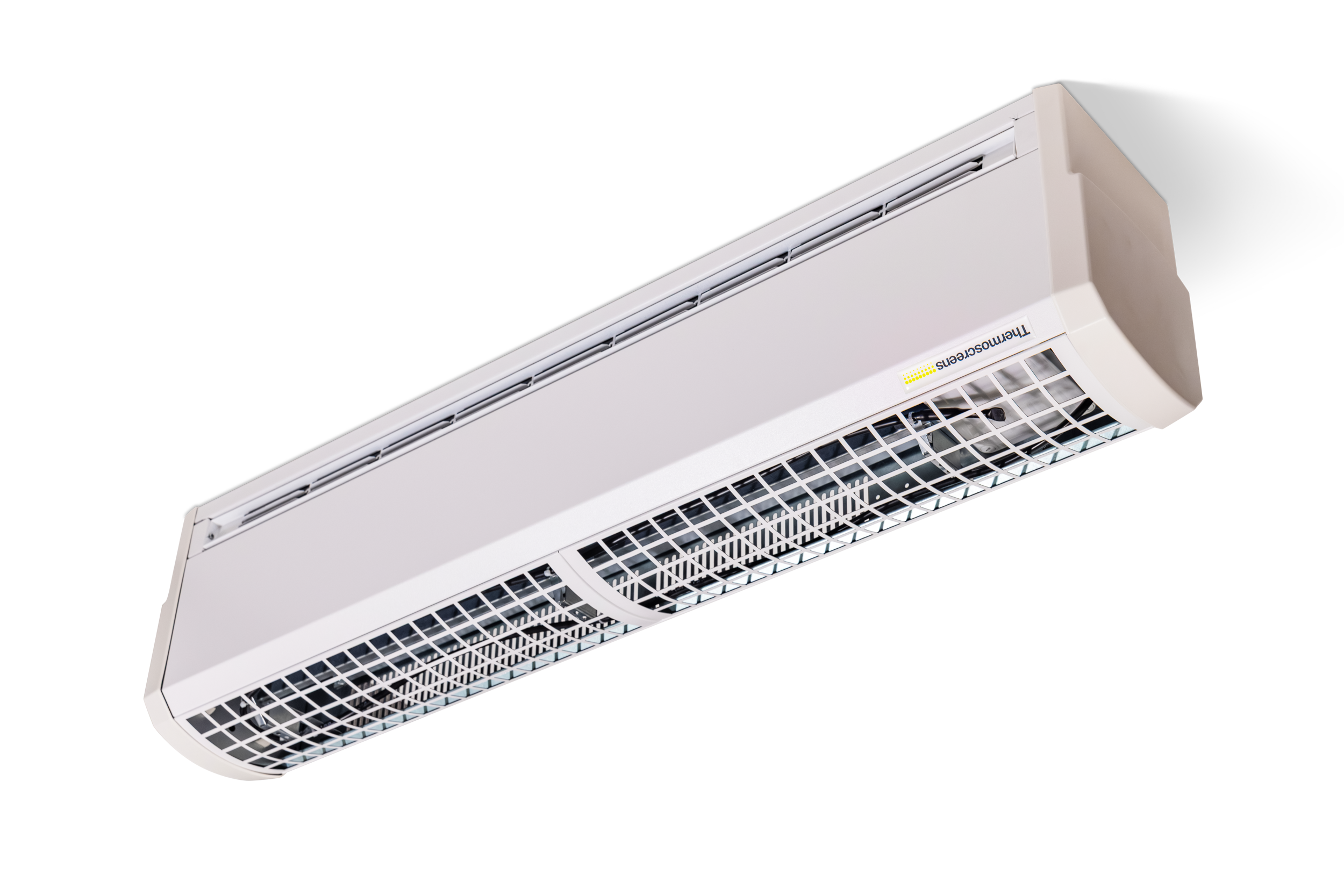
Thermoscreens CS Slim Air Curtain
How Do Cold Store Air Curtains Prevent Frost and Ice Build-Up?
Modern anti-frost air curtains are designed specifically for freezer rooms.
Key features include:
-
Heated intake grilles
-
Enlarged inlet openings
-
EC energy-efficient motors
-
High-velocity airflow
-
Horizontal or vertical mounting
These features help prevent:
-
Ice build-up on the unit
-
Frost around the doorway
-
Condensation on floors
-
Slip hazards
Thermoscreens cold store units are engineered for continuous operation in sub-zero environments, making them suitable for frozen food production plants. Read more.
What Is the ROI of Air Curtains vs Strip Curtains?
Although strip curtains have a lower purchase cost, the long-term cost is often higher.
Costs to consider
-
Energy loss
-
Refrigeration load
-
Maintenance
-
Replacement strips
-
Downtime
-
Hygiene cleaning
Air curtain ROI factors
-
Energy savings
-
Reduced defrost cycles
-
Lower maintenance
-
Faster workflow
-
Improved safety
-
Better compliance
Many frozen food facilities see payback within 12–24 months, depending on door size and usage.
When Should Frozen Food Facilities Replace Strip Curtains?
You should consider replacing strip curtains if:
-
Doors are frequently open
-
Ice builds up around entrances
-
Energy costs are high
-
Hygiene audits are strict
-
Forklift traffic is constant
-
Visibility is important
Modern frozen food production environments increasingly require high-performance doorway solutions, not just basic barriers.
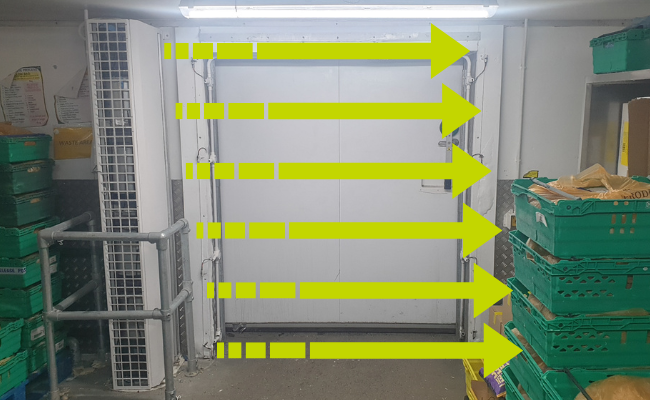
Why Thermoscreens Air Curtains Are Designed for the Cold Chain
Thermoscreens specialises in air curtains for cold storage, frozen food production, and temperature-controlled environments.
Key benefits include:
-
Designed for sub-zero use
-
Anti-frost technology
-
Energy-efficient EC motors
-
Compact, space-saving design
-
Horizontal and vertical options
-
Proven use in cold stores and food factories
Thermoscreens solutions are used in:
-
Frozen food production
-
Cold storage warehouses
-
Food processing plants
-
Retail freezer rooms
-
Distribution centres
The Better Solution for Modern Frozen Food Production
In today’s frozen food production facilities, controlling temperature, energy use, hygiene, and workflow is more important than ever.
While strip curtains may still be used in some applications, modern operations increasingly benefit from cold store air curtains, which provide:
-
Better energy efficiency
-
Improved hygiene
-
Safer working conditions
-
Faster access
-
Lower long-term costs
Thermoscreens air curtains are designed specifically for cold chain and frozen food environments, helping facilities maintain performance while reducing operating costs.
If you are currently using strip curtains in your frozen food facility, it may be time to consider a more efficient solution.
Speak to Thermoscreens about cold store air curtains today to find out how you could reduce energy costs and improve temperature control.
FAQ — Air Curtains vs Strip Curtains
What is better than strip curtains for cold rooms?
Air curtains are often better because they reduce energy loss, improve hygiene, and allow unrestricted access while maintaining temperature control.
Do air curtains work in freezer rooms?
Yes. Specialist cold store air curtains are designed for sub-zero environments and help prevent frost, condensation, and cold air loss.
Do air curtains save energy in frozen food production?
Yes. Air curtains reduce warm air infiltration, lowering refrigeration load and improving energy efficiency.
Are strip curtains hygienic for food production?
Strip curtains can be difficult to clean and may trap dirt or moisture, making them less suitable for hygiene-critical environments.
What is the ROI of installing air curtains in a cold store?
Many facilities see payback within 1–2 years due to energy savings, reduced maintenance, and improved efficiency.

Testimonials
“We’ve been very pleased with your products and would like to continue using them as a design feature in all our shops.”
- Project Manager, large ice-cream manufacturer.
“Wrapped up and gone before the lunch service, great turnaround from order to delivery.”
- Director, Restaurant in Aldwych
“Thank you for having an excellent working relationship with me, you are a credit to Thermoscreens.”
- Technical Engineer, HVAC
“The new air curtains in the freezer room have completely eliminated any ice and frost build up around the room, including the evaporators. As the main reason for cold room failure, this will undoubtedly help to reduce costly downtime, stock loss and maintenance calls.”
- Refrigeration Manager at leading supermarket
“The units we installed at Birmingham this week. We really enjoyed installing your units and would like to use them moving forward with the other stores.”
- Installer, Restaurant in Birmingham
“I would like to take this opportunity to thank you all for your performance, we have all been very impressed with your response to queries and turnaround of air curtains.”
- Installer, HVAC
“Thank you for all your support. We couldn’t have won this project without your assistance.”
- Senior engineer