Cut Contamination at the Door: Air Curtains Built for Abattoirs.

Air curtains for abattoirs are essential for maintaining hygiene, temperature control and compliance in meat processing environments. At every doorway, uncontrolled air movement can introduce contaminants, increase energy costs and compromise product quality.
Why Are Air Curtains for Abattoirs Essential?
In abattoirs and meat processing facilities, hygiene isn’t just important — it’s non-negotiable. Strict environmental control, contamination prevention, and temperature stability are critical to meeting compliance standards and protecting product integrity.
Yet one of the most overlooked risk points? Doorways.
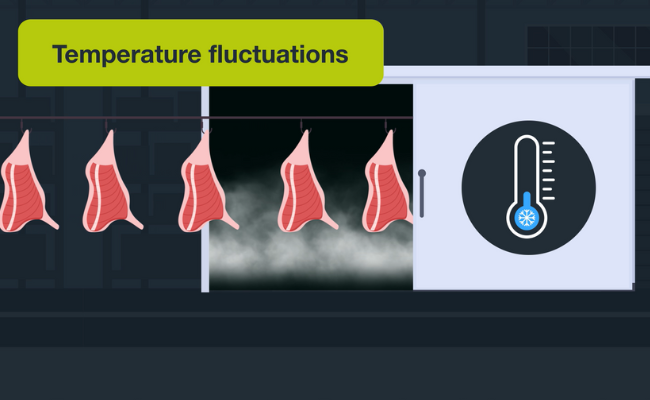
Every time a cold room, processing area, or loading bay door opens, it creates a pathway for:
- Airborne contaminants
- Temperature fluctuations
- Moisture ingress
- Increased refrigeration load
This is where air curtains for abattoirs come in, delivering a non-contact, hygienic barrier that supports compliance, reduces energy costs, and improves operational efficiency. We are members of the British Frozen Food Federation and the Cold Climate Federation and have built case studies with our customer to help identify challenges and create solutions.

What Are Air Curtains for Abattoirs and How Do They Work?
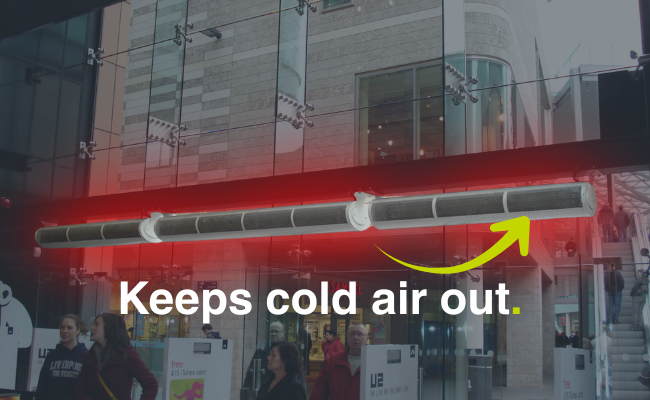
Air curtains create a high-velocity stream of air across an open doorway, forming an invisible barrier between two environments.
How it works:
- A fan-driven unit pulls air in and accelerates it through a nozzle
- The air is discharged downward (or horizontally) across the opening
- This creates a consistent air seal that separates environments
In abattoir environments, this means:
- Warm external air is kept out
- Cold, controlled air stays in
- Contaminants and insects are significantly reduced
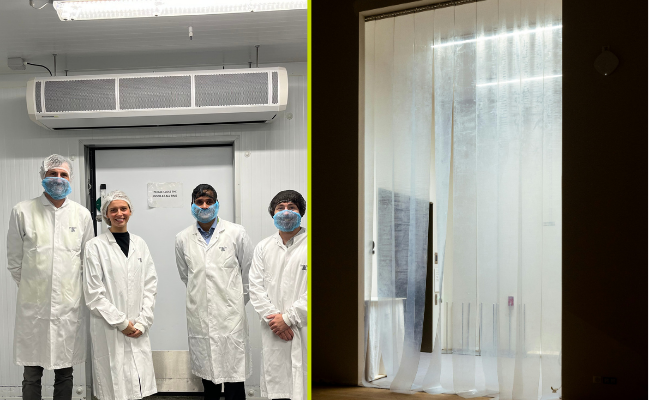
Unlike PVC strip curtains, air curtains allow unrestricted access while maintaining environmental separation — a major advantage in high-throughput operations.
Why Are Air Curtains Critical in Abattoirs?
1. Hygiene and Contamination Control
Abattoirs must comply with strict hygiene regulations, including Food Standards Agency guidelines and Hazard Analysis and Critical Control Points (HACCP) principles.
Air curtains support compliance by:
- Reducing airborne bacteria ingress
- Minimising insect entry
- Preventing cross-contamination between zones
This is particularly important in:
- Carcass processing areas
- Chilled storage rooms
- Dispatch/loading bays
2. Temperature Stability in Cold Chain Operations
Maintaining temperature consistency is essential in meat processing.
Without protection at doorways:
- Cold air escapes rapidly
- Refrigeration systems work harder
- Product quality can be compromised
Air curtains help:
- Maintain internal temperatures
- Reduce defrost cycles
- Stabilise processing conditions
3. Energy Efficiency and Reduced Operating Costs
One of the most compelling benefits is energy savings.
By reducing air exchange at open doors:
- Compressor run times decrease
- Peak loads are reduced
- Energy consumption drops
In many cases, facilities see:
- Payback periods of 1–3 years
- Immediate reduction in refrigeration strain
Why Stainless Steel Air Curtains Are Essential for Abattoirs
Hygienic Design Requirements
Abattoirs demand equipment that can withstand:
- Frequent washdowns
- Chemical cleaning agents
- High humidity environments
Stainless Steel Advantages
Stainless steel air curtains (such as Thermoscreens’ HE range) offer:
- Corrosion resistance in aggressive environments
- Smooth, easy-to-clean surfaces
- Compliance with hygiene standards
- Long operational lifespan
They are typically designed to meet IP-rated protection levels, ensuring reliability even in washdown zones.
How Do Air Curtains Compare to PVC Strip Curtains?
| Feature | Air Curtains | PVC Strip Curtains |
|---|---|---|
| Hygiene | No contact, easier to clean | Can harbour bacteria |
| Access | Unrestricted | Obstructive |
| Maintenance | Low | Requires regular replacement |
| Efficiency | Consistent performance | Degrades over time |
For abattoirs focused on hygiene and throughput, air curtains are increasingly replacing traditional barriers.
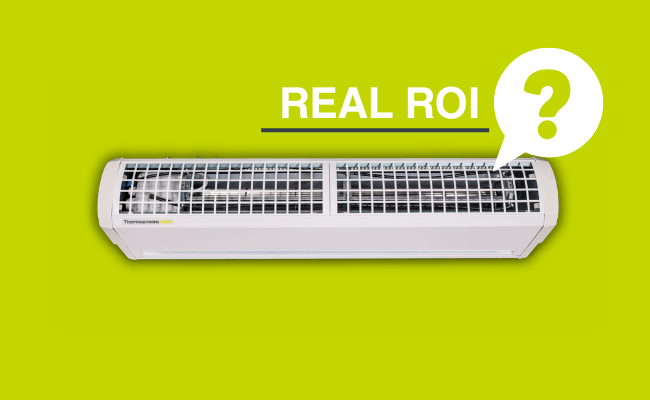
What Is the ROI of Air Curtains in Abattoirs?
Key ROI Drivers:
- Reduced refrigeration energy costs
- Lower maintenance on cooling systems
- Improved compliance and reduced risk
- Increased operational efficiency
Real-world impact:
- Less product spoilage risk
- Reduced downtime from temperature breaches
- Improved working conditions for staff
Where Should Air Curtains Be Installed in Abattoirs?
Strategic placement is key to maximising performance:
- Cold room entrances
- Blast chillers and freezers
- Processing area doorways
- Loading docks and dispatch zones
Each application may require different specifications:
- Mounting height
- Air velocity
- Control integration (e.g., door sensors, BMS)
How Do You Specify the Right Air Curtain for an Abattoir?
When selecting an air curtain, consider:
Technical factors:
- Door size and height
- Temperature differential
- Air velocity requirements
- Environmental conditions (humidity, washdown)
Operational factors:
- Frequency of door openings
- Hygiene requirements
- Integration with existing systems
Working with a specialist like Thermoscreens ensures:
- Correct sizing and specification
- Compliance with industry standards
- Proven performance in similar environments
Supporting Compliance and Industry Standards
Air curtains contribute to compliance with:
- Food Standards Agency food hygiene requirements
- Hazard Analysis and Critical Control Points (HACCP) frameworks
- Cold chain best practices
They form part of a broader strategy to maintain:
- Clean processing environments
- Stable temperatures
- Audit-ready facilities
FAQs: Air Curtains for Abattoirs
Do air curtains meet food hygiene regulations?
Yes. When correctly specified, they support compliance with hygiene standards by reducing contamination risks at doorways.
Are stainless steel air curtains necessary?
In washdown environments like abattoirs, stainless steel is strongly recommended due to its durability and hygiene benefits.
How much energy can air curtains save?
Savings vary, but many facilities report significant reductions in refrigeration energy use and improved system efficiency.
Can air curtains replace strip curtains?
In most cases, yes, particularly where hygiene, access, and operational efficiency are priorities.
Get a site survey now
Air curtains are no longer a “nice to have” in abattoirs, they are a strategic investment in hygiene, efficiency, and compliance.
With stainless steel construction, proven energy savings, and clear operational benefits, they offer a modern solution to one of the most persistent challenges in food processing environments.
If you operate an abattoir or meat processing facility, now is the time to evaluate your doorway protection strategy.
Book a free site survey with Thermoscreens to:
- Identify energy-saving opportunities
- Improve hygiene and compliance
- Specify the right air curtain for your environment
Get in touch today and see how quickly air curtains can deliver measurable results.

Testimonials
“We’ve been very pleased with your products and would like to continue using them as a design feature in all our shops.”
- Project Manager, large ice-cream manufacturer.
“Wrapped up and gone before the lunch service, great turnaround from order to delivery.”
- Director, Restaurant in Aldwych
“Thank you for having an excellent working relationship with me, you are a credit to Thermoscreens.”
- Technical Engineer, HVAC
“The new air curtains in the freezer room have completely eliminated any ice and frost build up around the room, including the evaporators. As the main reason for cold room failure, this will undoubtedly help to reduce costly downtime, stock loss and maintenance calls.”
- Refrigeration Manager at leading supermarket
“The units we installed at Birmingham this week. We really enjoyed installing your units and would like to use them moving forward with the other stores.”
- Installer, Restaurant in Birmingham
“I would like to take this opportunity to thank you all for your performance, we have all been very impressed with your response to queries and turnaround of air curtains.”
- Installer, HVAC
“Thank you for all your support. We couldn’t have won this project without your assistance.”
- Senior engineer